

Nutrition basics
Saturated vs unsaturated fat: differences, foods, and label reading
Learn the difference between saturated and unsaturated fat, common food sources, and how to compare labels in practical terms.
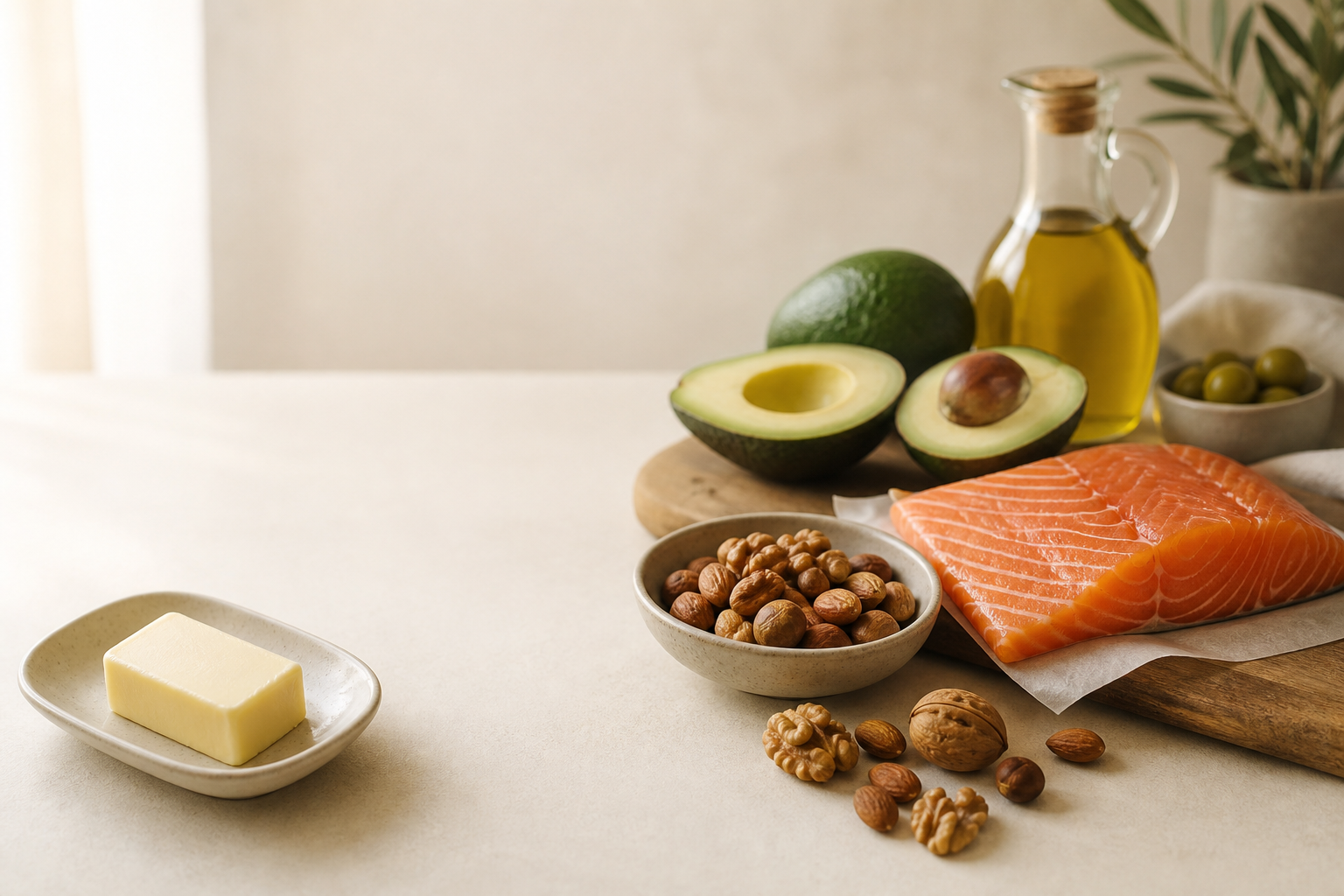
Saturated and unsaturated fats are different types of dietary fat. Unsaturated fats are common in foods such as nuts, seeds, fish, avocado, and many plant oils, while saturated fat is common in butter, fatty meats, cheese, and some tropical oils. Labels help you compare similar products; one food does not define an entire diet.
Where different fats are commonly found
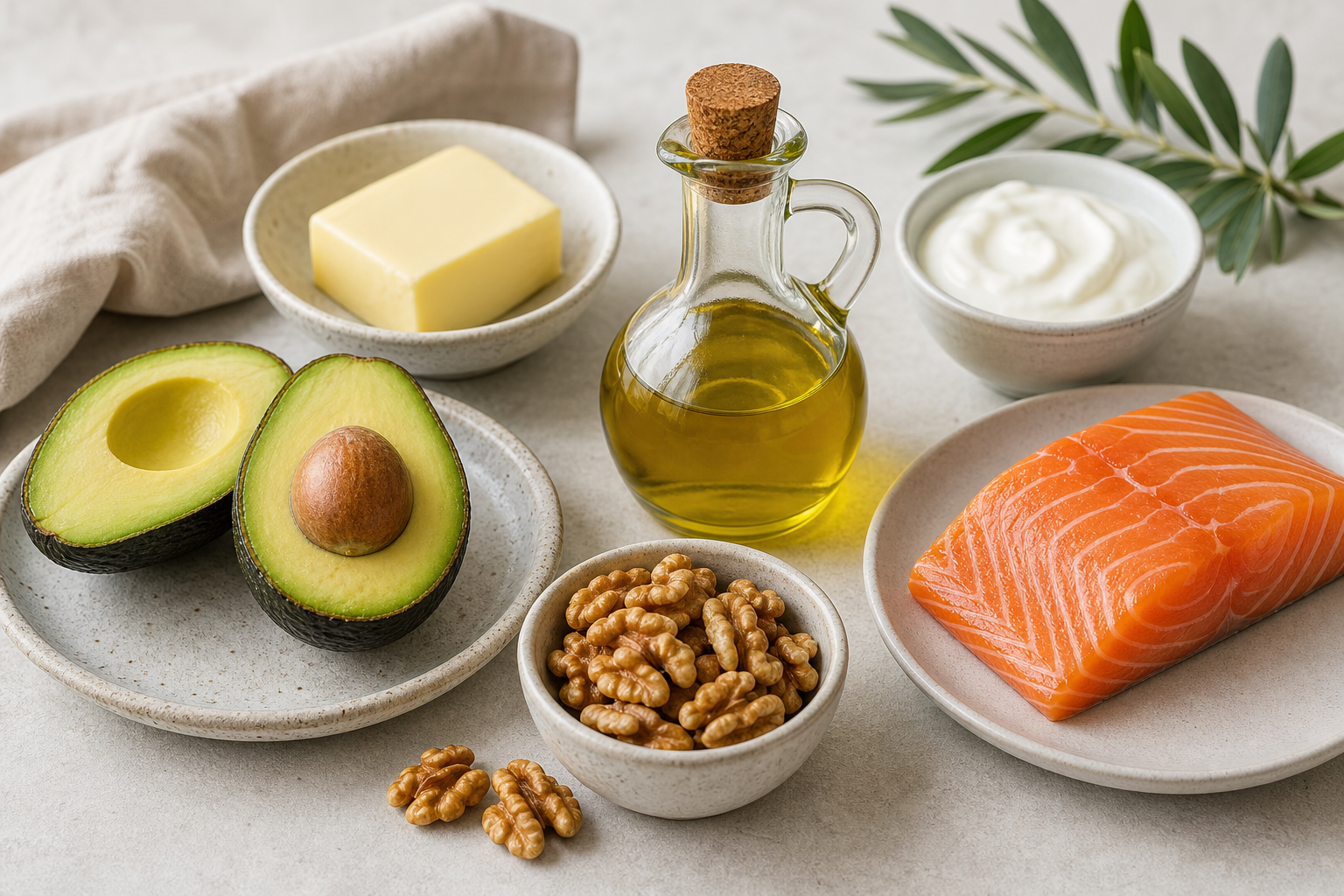
Unsaturated fats are found in foods such as fish, avocado, nuts, seeds, and many plant oils. Saturated fat is commonly found in fatty meat, butter, cream, cheese, ghee, lard, palm oil, and coconut oil.
Foods are not defined by one nutrient alone. Portion, preparation, and the wider diet also matter.
Focus on replacement, not restriction alone
When a change is useful, consider what will replace it. Swapping some saturated-fat sources for unsaturated-fat sources or fibre-rich foods is often more practical than only trying to remove foods.
- Use a suitable plant oil instead of solid cooking fats when it fits the recipe.
- Include nuts, seeds, fish, or pulses across the week according to your preferences and needs.
- Choose steaming, boiling, baking, or stir-frying with modest oil more often than deep-frying.
Use broad guidance thoughtfully
WHO recommends no more than 10% of total energy from saturated fat and no more than 1% from trans fat. These are broad population recommendations.
Practical next steps
- 1Notice the fats and oils used in meals you make or buy repeatedly.
- 2Compare labels within one product category instead of assuming a food is high or low in a nutrient from appearance.
- 3Choose one realistic swap that suits your cooking, culture, budget, and care plan.
Frequently asked questions
Are all saturated-fat foods unhealthy?
Foods are not simply good or bad. The useful question is how often they appear and what they replace in your usual pattern. Individual health needs can change the advice that is appropriate.
Can an app identify the cooking oil in restaurant food?
No. A photo cannot verify the cooking fat, quantity, or recipe. Treat the result as an editable record and use restaurant information when it is available.