

Nutrition basics
Trans fat and partially hydrogenated oils: what to look for
Learn what trans fat and partially hydrogenated oils are, where they can appear, and how to read a label before choosing.

Trans fat is a type of unsaturated fat. Partially hydrogenated oil is an ingredient historically used to make oils more solid and is a key source term to look for on labels; it can signal industrially produced trans fat even when a package uses a “0 g” claim.
Why trans fat matters
According to the World Health Organization (WHO), trans fat has no known health benefit and higher intake is associated with greater risk of coronary heart disease. Industrially produced trans fat is not part of a healthy diet and should be avoided.
This is not about making one food “forbidden.” It is about making the fats you eat most often work better for your overall eating pattern.
Where it can show up
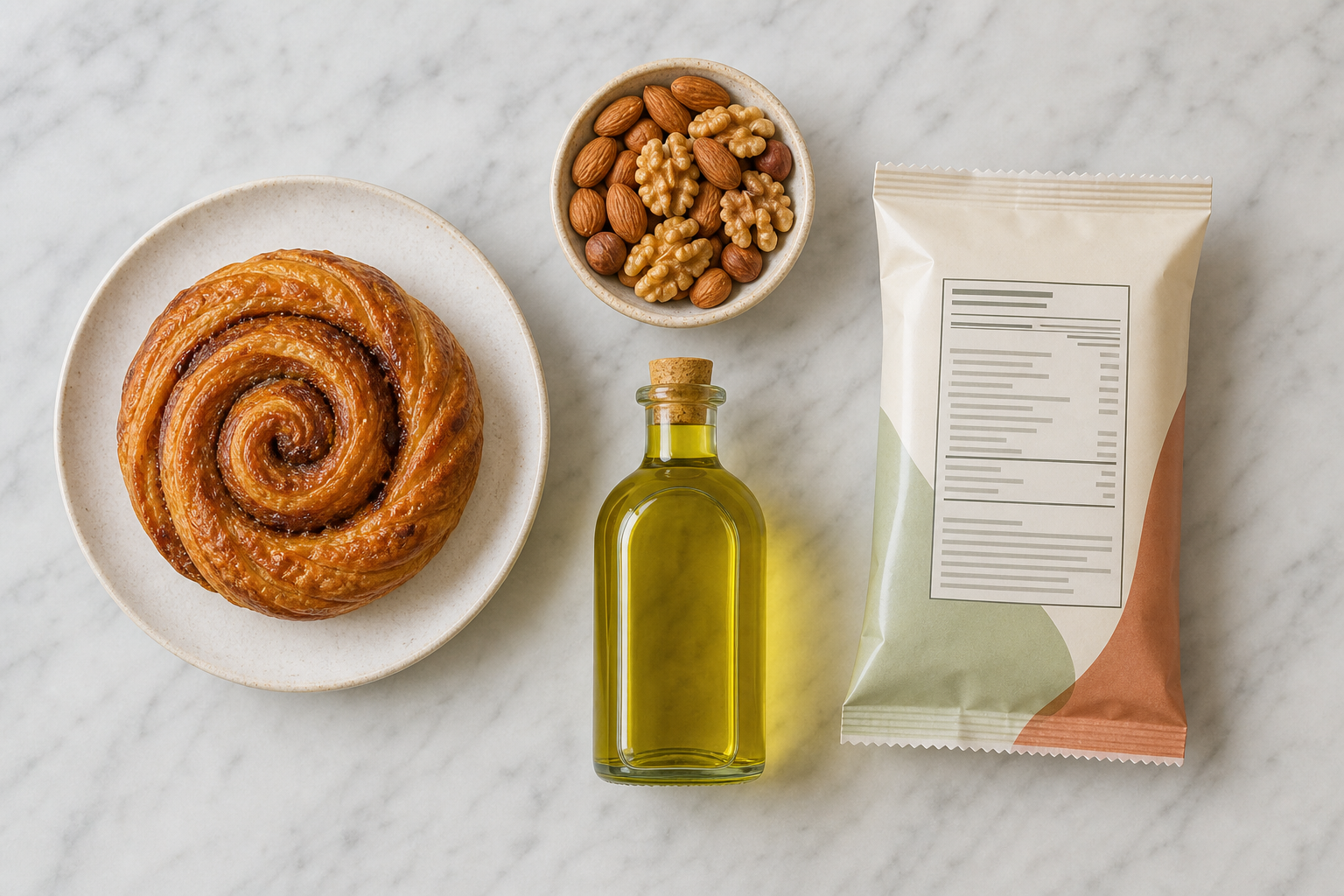
Industrially produced trans fat has historically been associated with partially hydrogenated oils. Depending on the recipe and where you live, it can appear in some fried foods, baked goods, packaged snacks, shortenings, spreads, and restaurant foods.
A food category alone cannot tell you the amount. Check the ingredient list when it is available, particularly for the words “partially hydrogenated oil.”
A practical approach at home and when eating out
WHO recommends keeping trans fat below 1% of total energy intake; for a 2,000-calorie diet, that is less than 2.2 grams a day. Individual meals do not need to be perfect for the overall pattern to improve.
- Choose products without partially hydrogenated oils when comparing similar options.
- Make fried and heavily processed foods an occasional choice rather than a default.
- Use a variety of unsaturated-fat sources in everyday meals, such as nuts, seeds, fish, avocado, and suitable plant oils.
- Use your food log to notice repeat patterns, not to judge a single meal.
Practical next steps
- 1Check the ingredient lists of packaged snacks, baked goods, spreads, and frying products you buy often.
- 2When comparable options exist, prefer one without partially hydrogenated oils.
- 3Use your meal record to identify repeat occasions for fried or highly processed foods, then choose one manageable change.
Frequently asked questions
Does “0 g trans fat” always mean none is present?
Labelling rules and serving sizes differ by market. Read the ingredient list as well as the nutrition panel, and use the rules that apply where you live.
Can I identify trans fat from a restaurant meal photo?
No. A photo cannot show the oil or shortening used. Restaurant and manufacturer information are more dependable sources.