Chronic condition support
High blood pressure and food logging: track sodium with the right data source
A careful way to log processed foods, condiments, and restaurant meals without pretending a photo can measure sodium.
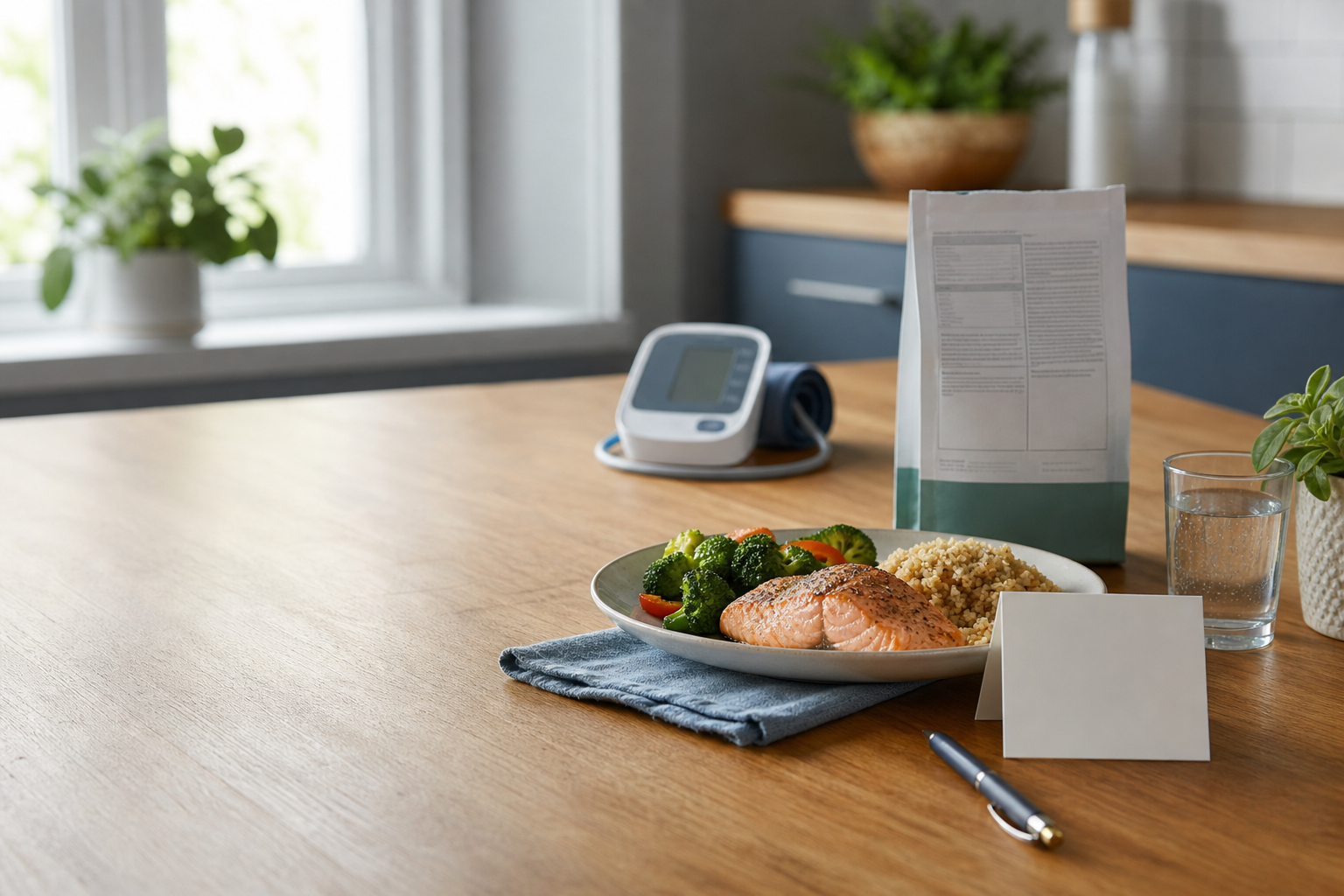
A food photo can help you remember a meal, but it cannot reliably determine sodium. For sodium tracking, the most useful details come from labels, recipes, restaurant information, and your own notes.
Log likely sources
Note packaged foods, processed meats, instant products, soups, sauces, stock cubes, soy sauce, and restaurant meals. These often contribute more sodium than a salt shaker alone.
Separate estimates from label values
When a nutrition label or restaurant information is available, record that value and its serving size. Mark photo-based information as an estimate rather than a measured sodium value.
Follow your clinical plan
WHO recommends adults reduce sodium intake to less than 2 grams a day, equivalent to 5 grams of salt. Your own goal, medicines, and monitoring plan must come from your qualified care team.
Practical next steps
- 1Keep the nutrition label and serving size for packaged foods you eat repeatedly.
- 2Note sauces, soups, stock, cured foods, and takeaway meals in addition to the main food.
- 3Mark photo-based values as estimates and bring label-backed records to a clinical conversation when useful.
Frequently asked questions
Can I measure sodium from a photo or by taste?
No. Neither a photo nor taste can reliably measure sodium. Use the label, recipe, or restaurant information for the exact food when available.
Can I change medication or use a salt substitute based on my log?
No. Follow medical advice for medication and salt substitutes, particularly if you have kidney disease or another health condition.