Chronic condition support
Chronic kidney disease: use a food record for care-team conversations
A safe way to organise meals, labels, and questions when kidney nutrition needs are individualised.
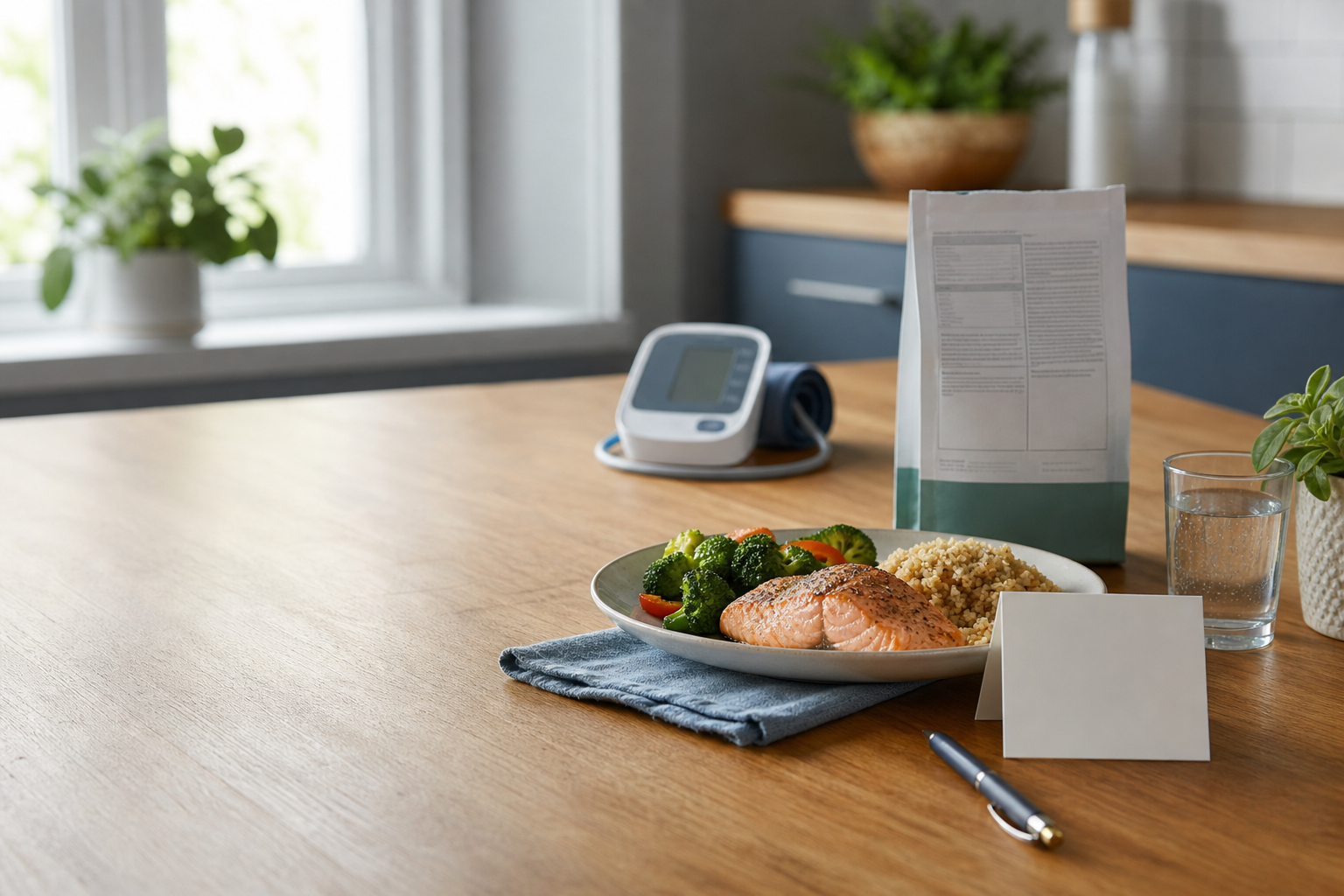
Kidney nutrition plans can differ substantially between people and can change with kidney function, lab results, medicines, and treatment. A meal record can support discussion, but it must not create a default “kidney diet.”
Record, do not self-prescribe
Save meals, drinks, packaged-food labels, restaurant notes, and questions. Do not set your own protein, potassium, phosphorus, fluid, or sodium limit from general online content.
Ask which information matters to you
A kidney clinician or renal dietitian can explain which nutrients, labels, and portions matter for your current plan and why. Laboratory results and treatment type can affect that answer.
Share a useful summary
Bring a typical week rather than only an unusually “good” or “bad” day. This gives the care team practical context for personalised nutrition counselling.
Practical next steps
- 1Record typical meals, drinks, packaged-food labels, restaurant details, and questions for your care team.
- 2Ask which nutrients, labels, and portions matter for your current individual plan.
- 3Bring several ordinary days rather than only an unusually good or difficult day to your appointment.
Frequently asked questions
Can a nutrition app give me a kidney diet?
No. Kidney nutrition plans are individual and may change over time. Use the app as a record to discuss with a kidney clinician or renal dietitian, not as a prescription.
Should I restrict potassium or protein on my own?
No. Restricting nutrients without individual guidance can be unsafe. Ask your qualified kidney-care team what applies to your current condition and treatment.