Food labels
Does “0 g trans fat” mean there is none? How to read the label
Understand why a zero on the nutrition panel and the ingredient list can tell different parts of the story.

A “0 g trans fat” declaration can be useful, but the exact meaning depends on local labelling rules and serving size. Read it together with the ingredient list rather than treating it as a complete verdict.
Serving size changes the picture
Nutrition declarations are generally made per labelled serving. A small serving can make a number look less significant than the amount someone eats in one sitting.
Check the rules where the product is sold
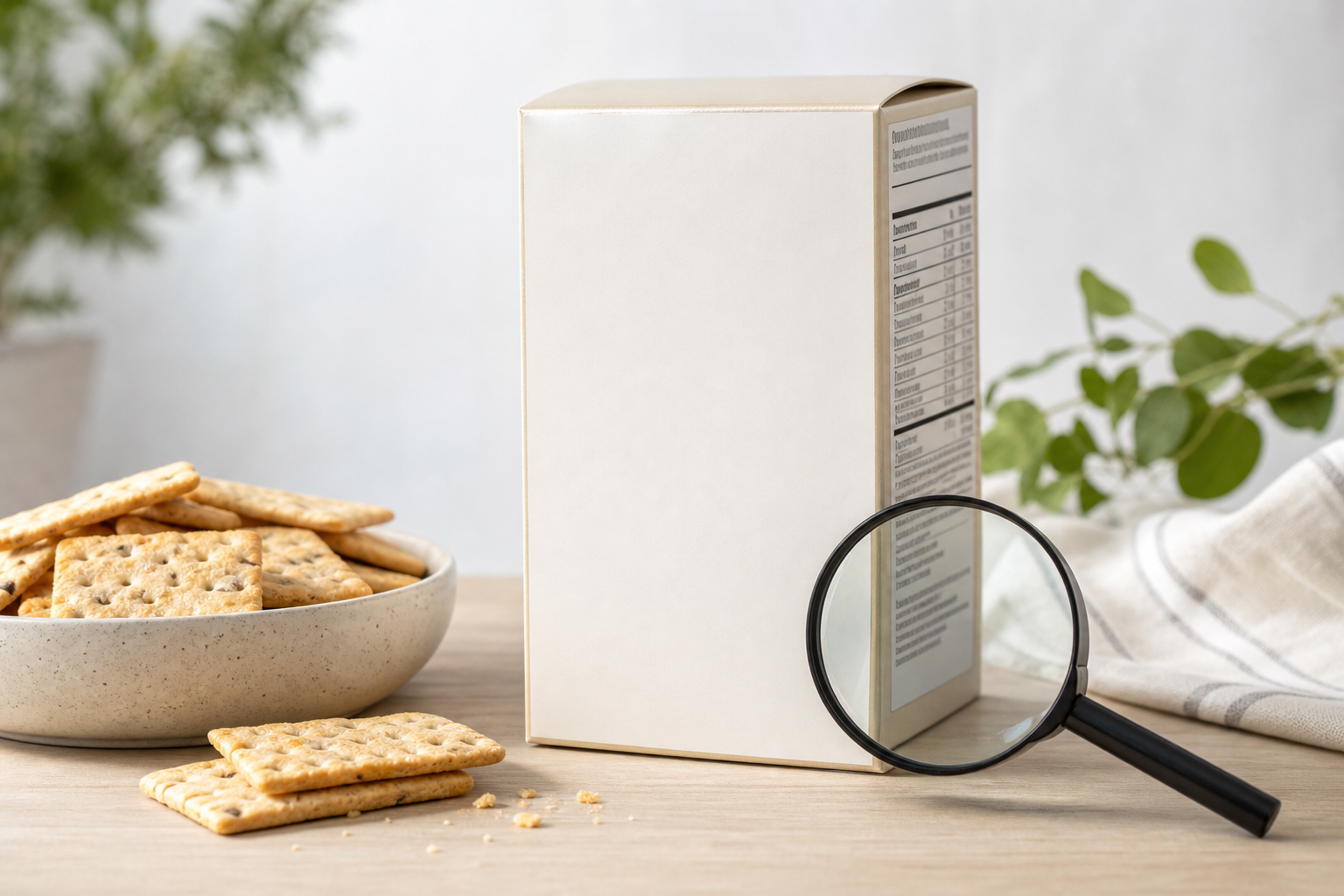
For example, the US Food and Drug Administration permits products with less than 0.5 grams of trans fat per serving to be declared as 0 grams. That specific threshold is not a universal rule, so use the rules of the market where you buy food.
Use the ingredient list as a second check
When it is available, look for “partially hydrogenated oil.” Compare similar products and choose an option without it where practical. Industrially produced trans fat should be avoided as part of a healthy overall pattern.
Practical next steps
- 1Read the serving size and full nutrition panel instead of relying only on a front-of-pack claim.
- 2Check the ingredient list for terms that matter in your market, including partially hydrogenated oils where applicable.
- 3Compare similar products and choose an option that fits your overall eating pattern.
Frequently asked questions
Does “zero trans fat” mean that a product is automatically a healthy choice?
No. It is one piece of information. Consider the full label, how often you eat the food, and how it fits into your overall diet.
Why should I still read the ingredient list?
Serving-size rules and product formulations vary. The ingredient list provides context that a single front-of-pack claim does not.